Inna Drozd
View all cases
Due Diligence
Industry: LegalTech
Role: Product Designer
Overview
This case focuses on designing a due diligence workspace for legal teams conducting M&A reviews.
I structured complex ownership data, review workflows, and client-facing outputs into a single interactive system that supports accuracy, collaboration, and faster decisions under tight deal timelines.
Problem
- Legal due diligence relied on fragmented internal tools and manual workflows, leading to duplicated data, inconsistent records, and rework.
- Reviewing complex ownership structures across large M&A transactions was slow and error-prone due to lack of structure and visibility.
- Teams needed a structured, collaborative way to produce accurate, client-ready outputs under tight deal timelines.
Process
Research
- Analyzed how legal teams run due diligence across discovery, review, and reporting, focusing on handoffs, rework, and data duplication.
- Mapped the existing offline workflow (documents, spreadsheets, email) to pinpoint where structure, visibility, and automation were missing.
Key Insights
A single, system-driven workspace outperforms document-based cycles by reducing fragmentation and improving speed and consistency.
Clear ownership and live, structured outputs remove coordination overhead and eliminate repeated Word rework.
Solution
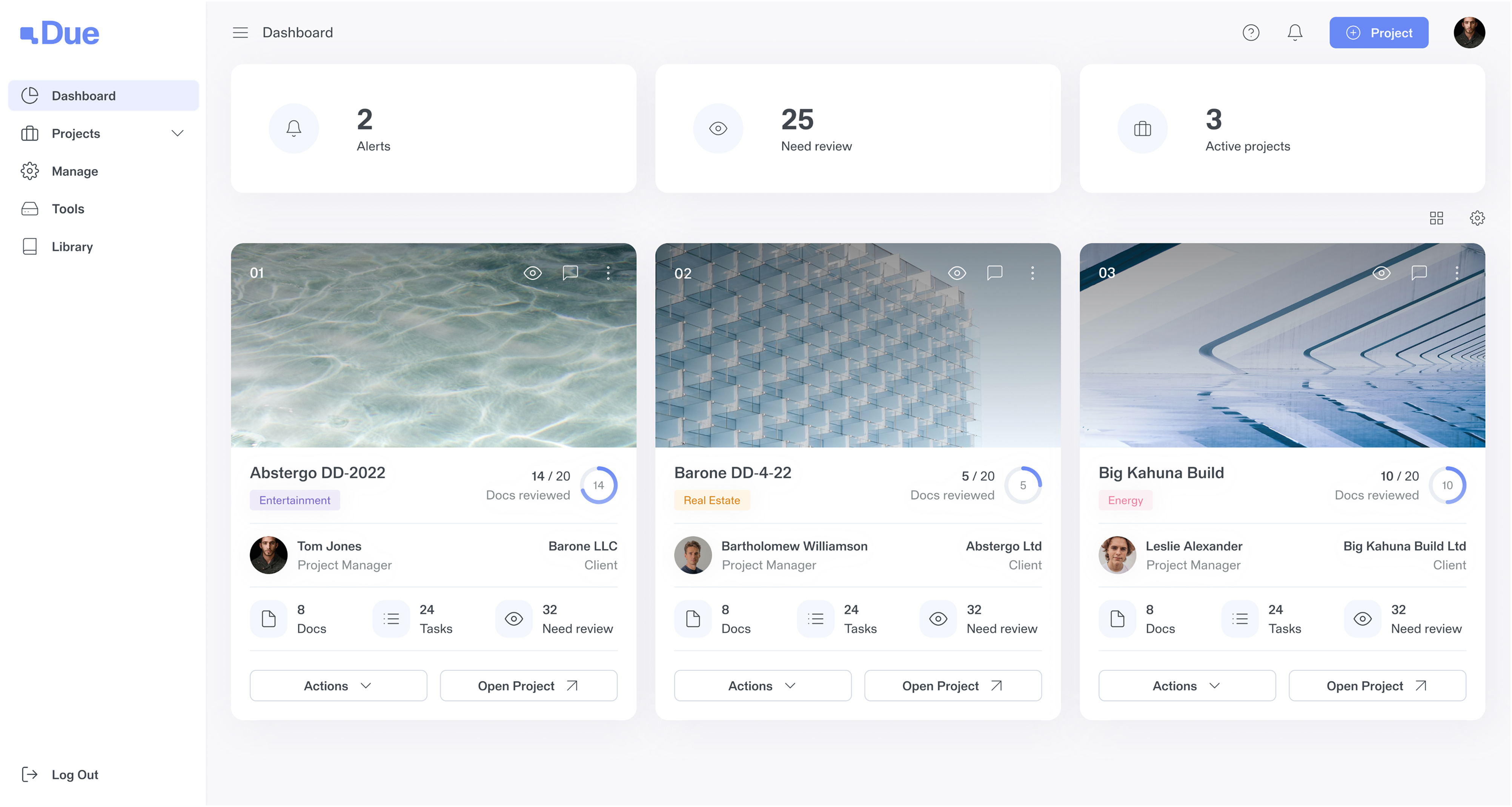
Project overview and prioritization
- A centralized dashboard surfaces active projects, ownership, deadlines, and blockers to support fast triage and planning.
- Quick access to recent activity reduces context switching and helps teams stay aligned under tight timelines.
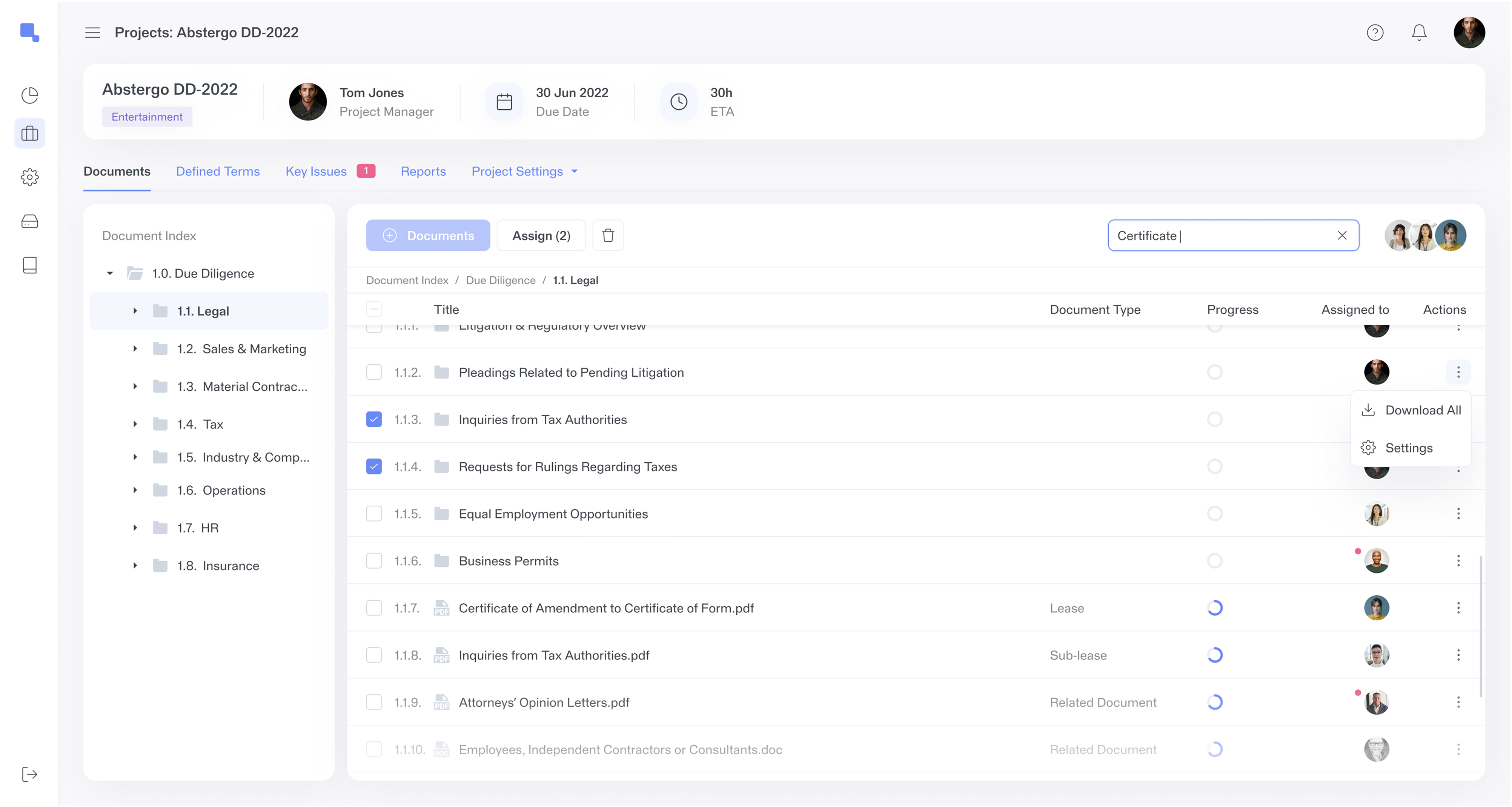
Structured project workspace
- Each project is organized into a single workspace for documents, findings, requests, and collaboration.
- Clear ownership, permissions, and status tracking reduce ambiguity and coordination overhead.
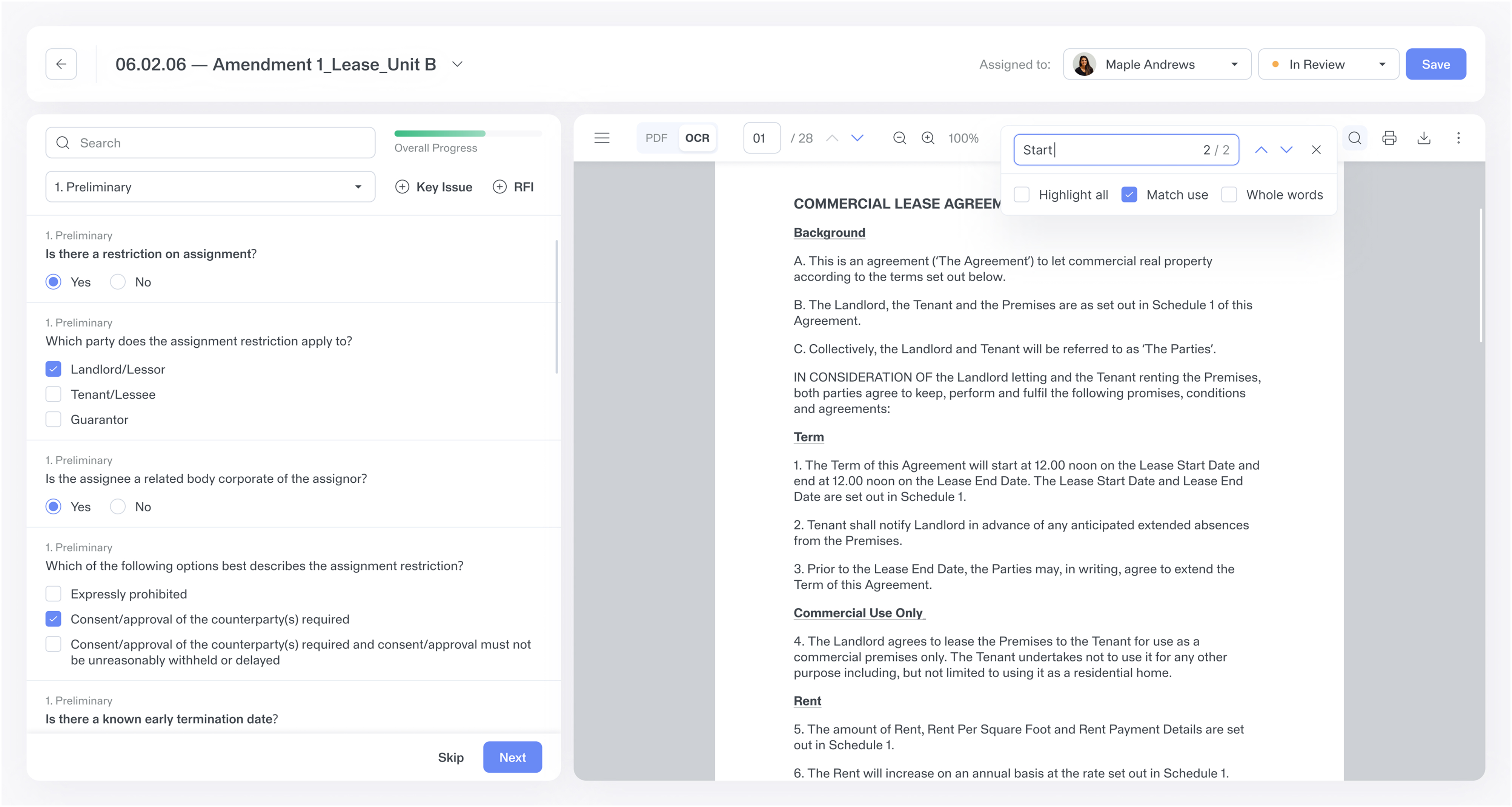
AI-assisted document review
- Documents are analyzed in context, with key clauses, entities, and dates surfaced directly in the viewer.
- Findings, notes, and excerpts are anchored to source text to preserve traceability and review confidence.
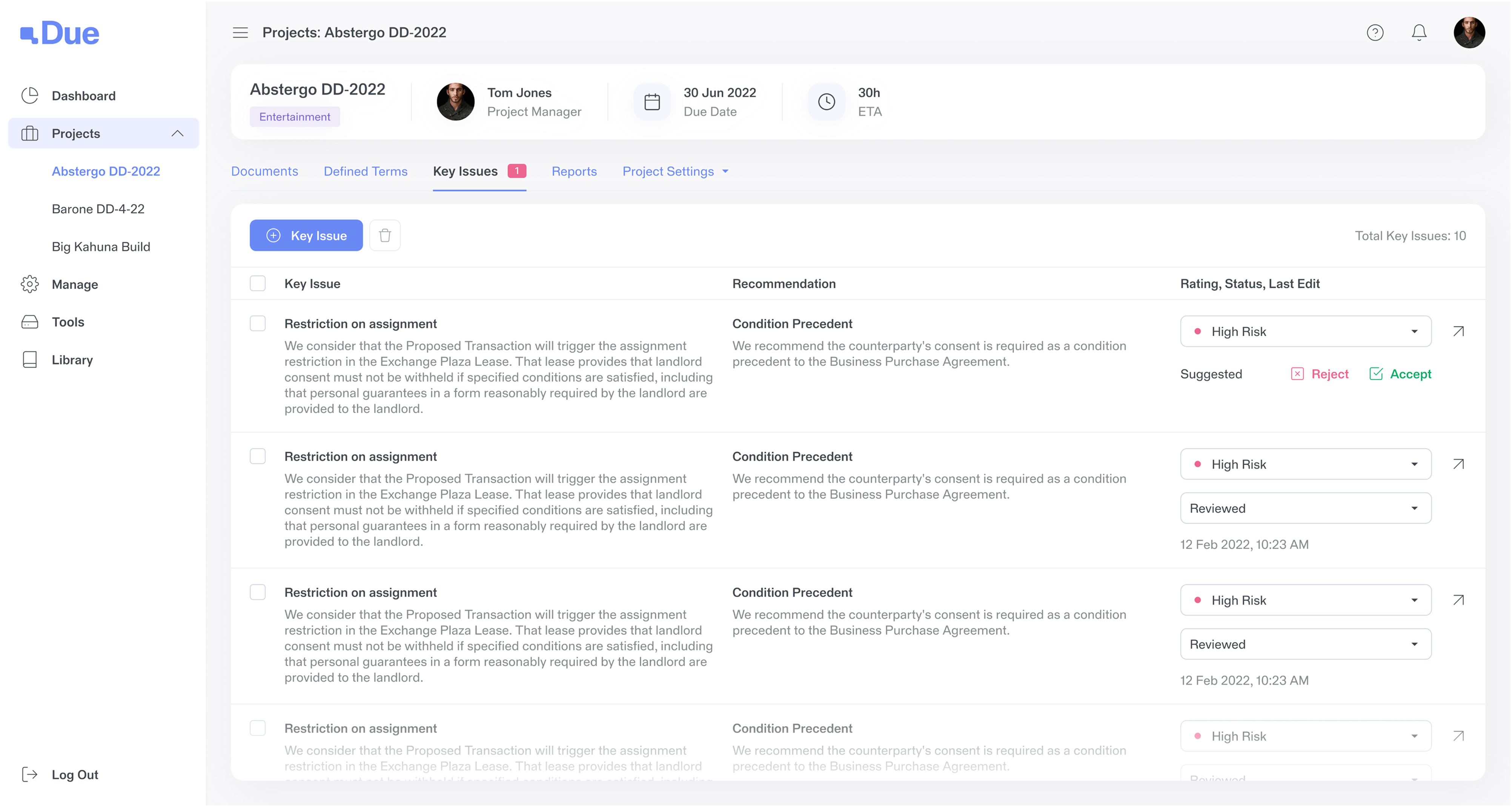
Issue tracking and resolution
- Legal issues are logged with severity, ownership, and status to track resolution end-to-end.
- Linked evidence and affected entities keep risk assessment grounded in source material.
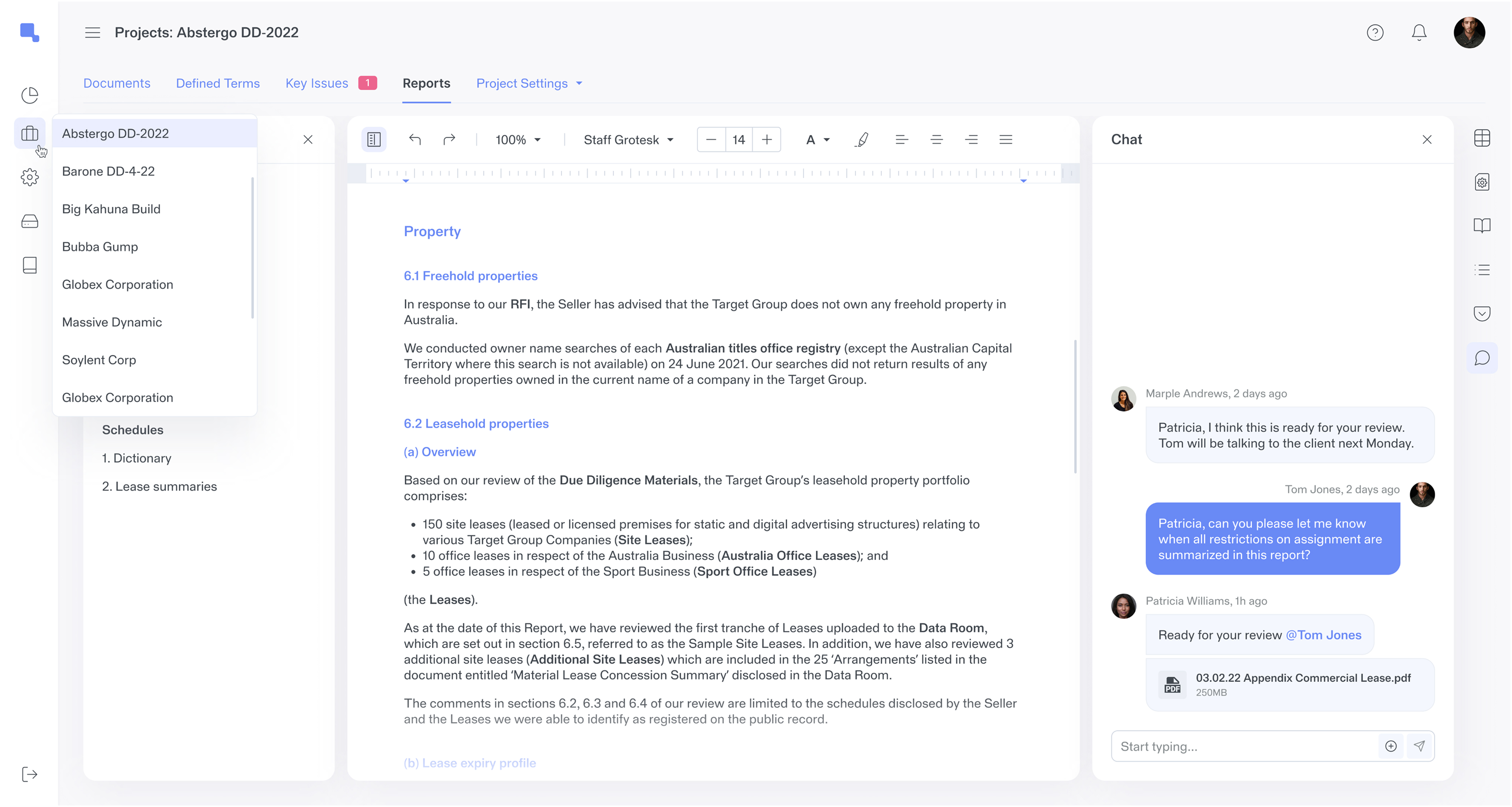
Client-ready reporting
- Reports are built directly from validated findings using structured sections and templates.
- Inline editing, review comments, and versioning reduce Word rework before export.
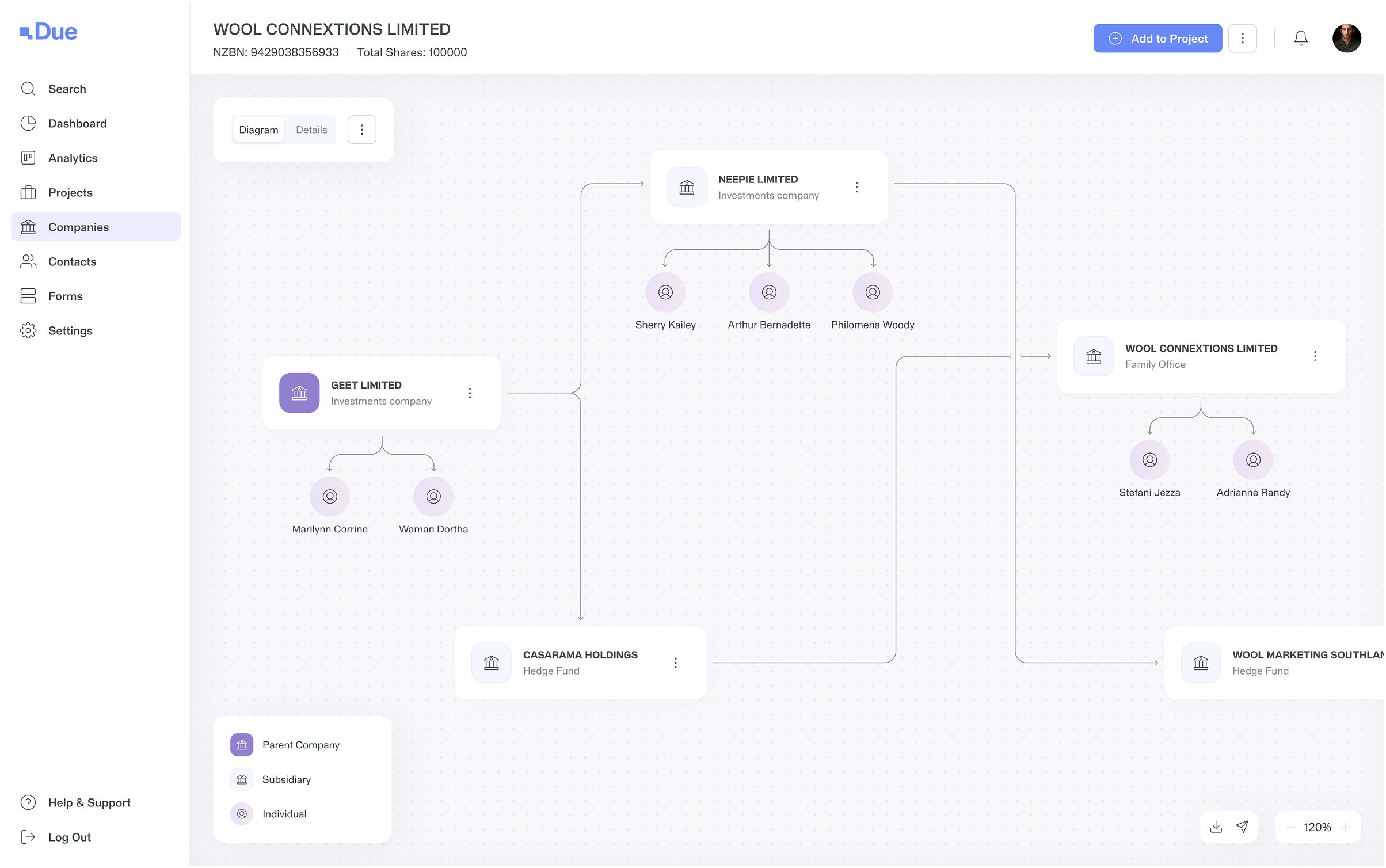
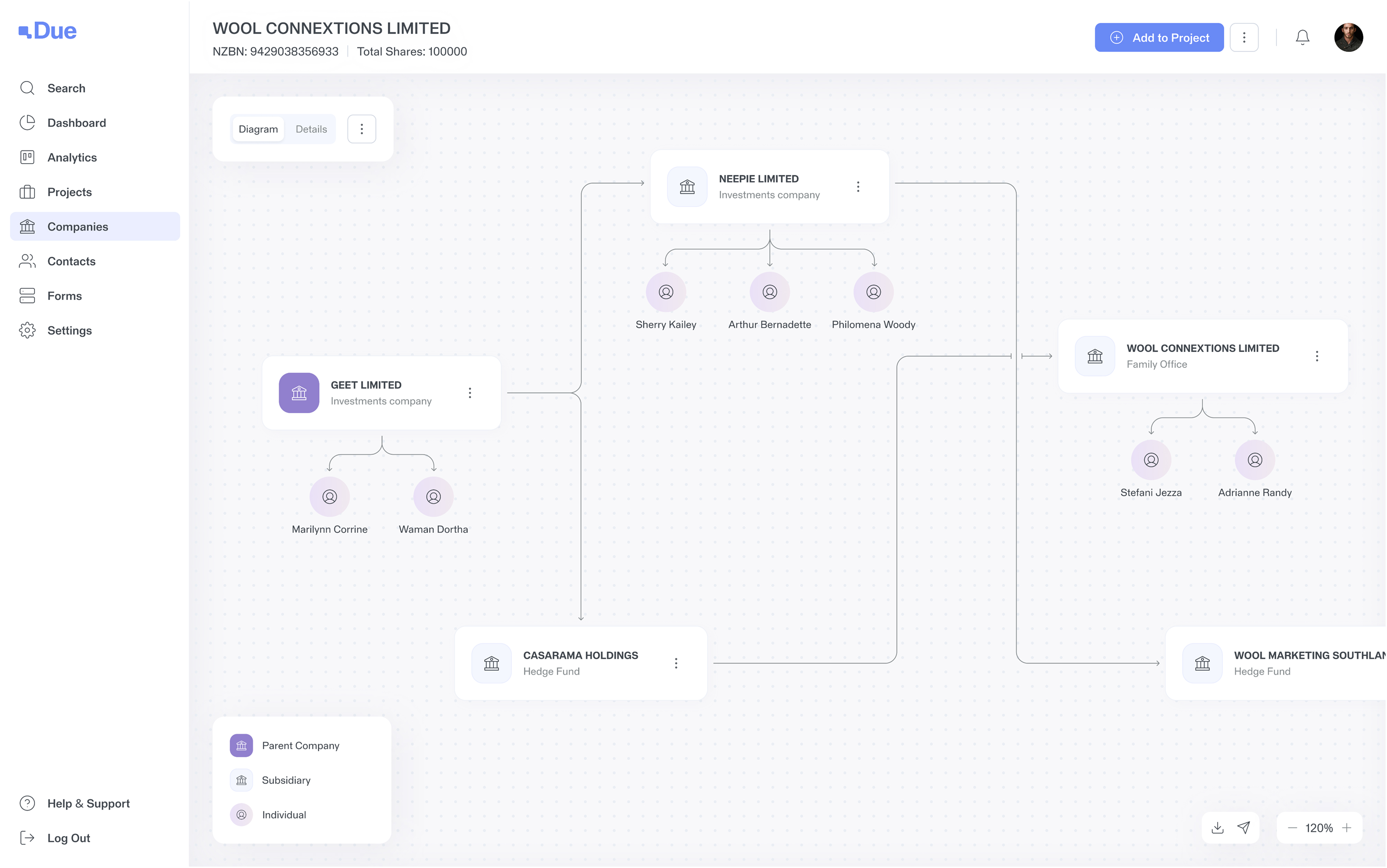
Visual ownership mapping
- Interactive company diagrams visualize ownership structures and relationships across entities.
- Risk hotspots and open issues can be spotted quickly and shared as report-ready snapshots.
Impact
Digitizing due diligence replaced Word/email cycles with one auditable workspace, cutting prep time and boosting delivery predictability.
TIME TO MVP
11 weeks
Plan: 12 w → Actual: 11 w
-8%
COMPONENT COVERAGE
78%
Before: 0% → After: 78%
+78 pp
DEMO PREP TIME
10 min
Before: 30 m → After: 10 m
-67%
Before: plan & sprint-1/2 baseline; After: MVP code-freeze & first demo, same scope. Period: project start → first demo. Medians; normalized/anonymized.
Business meaning
- Predictable delivery (on-time / on-budget) reduces risk and unlocks early sales conversations.
- High first-pass handoff and component coverage lower development costs for subsequent iterations.
- Faster preparation of interactive reports makes demos more persuasive and shortens feedback cycles.