Inna Drozd
View all cases
Election Notice
Industry: FinTech
Role: Product Designer
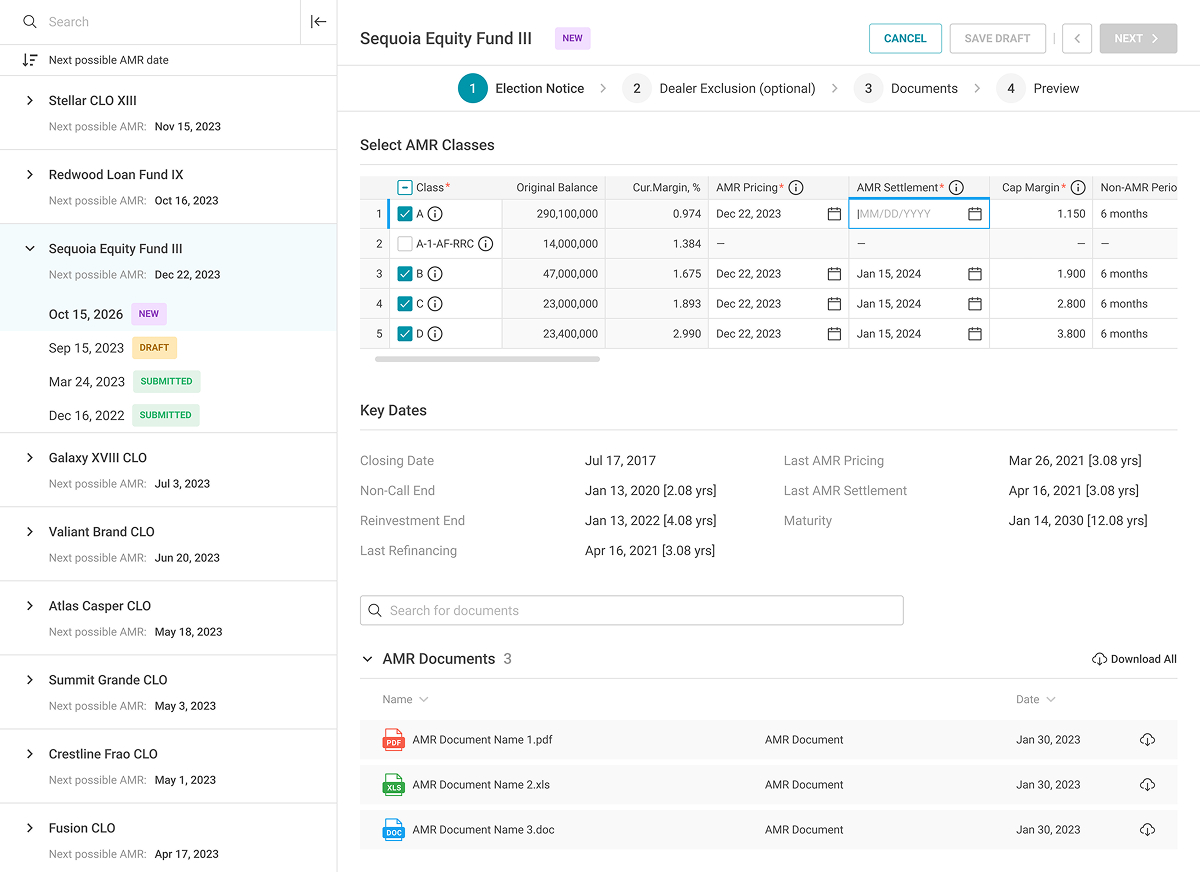
Overview
This case focuses on redesigning the Election Notice setup flow: a compliance-critical workflow used to initiate AMR elections for CLO deals.
I transformed a fragmented, largely offline process into a structured in-product flow by clarifying required inputs, enforcing validation rules, and making submissions traceable under regulatory constraints.
Without this change, election notice preparation would not scale reliably as deal volume increased, creating operational and compliance risk.
Problem
- Election Notices were prepared offline via spreadsheets and email threads, causing delays, manual errors, and elevated compliance risk.
- The lack of clear states, validation, and ownership made it difficult to track what was submitted, by whom, and at which stage.
- The workflow needed to support strict compliance requirements while reducing rework and ensuring consistent, on-time submissions across deals.
Process
Process (Compliance-driven redesign)
- Rebuilt the election notice flow as a state-driven system with explicit ownership and auditable states.
- Translated regulatory and trustee requirements into mandatory inputs and conditional rules enforced in-product.
- Designed validations to prevent submission errors while meeting live trading timelines.
Key Insights
Users need visibility into the next available AMR date at the deal level to plan submissions accurately.
Automated document generation helps, but users need control to review, replace, or attach custom files to meet trustee expectations.
In-product cancellation removes manual follow-ups, email coordination, and operational delays after submission.
Simplified, state-driven workflow
Solution
Flow
- Election Notices are structured at the deal level to keep drafts, submissions, and history clearly tied to a single deal context.
- The flow intentionally limits free-form inputs in favor of structured fields to prevent submission errors and reduce review cycles.
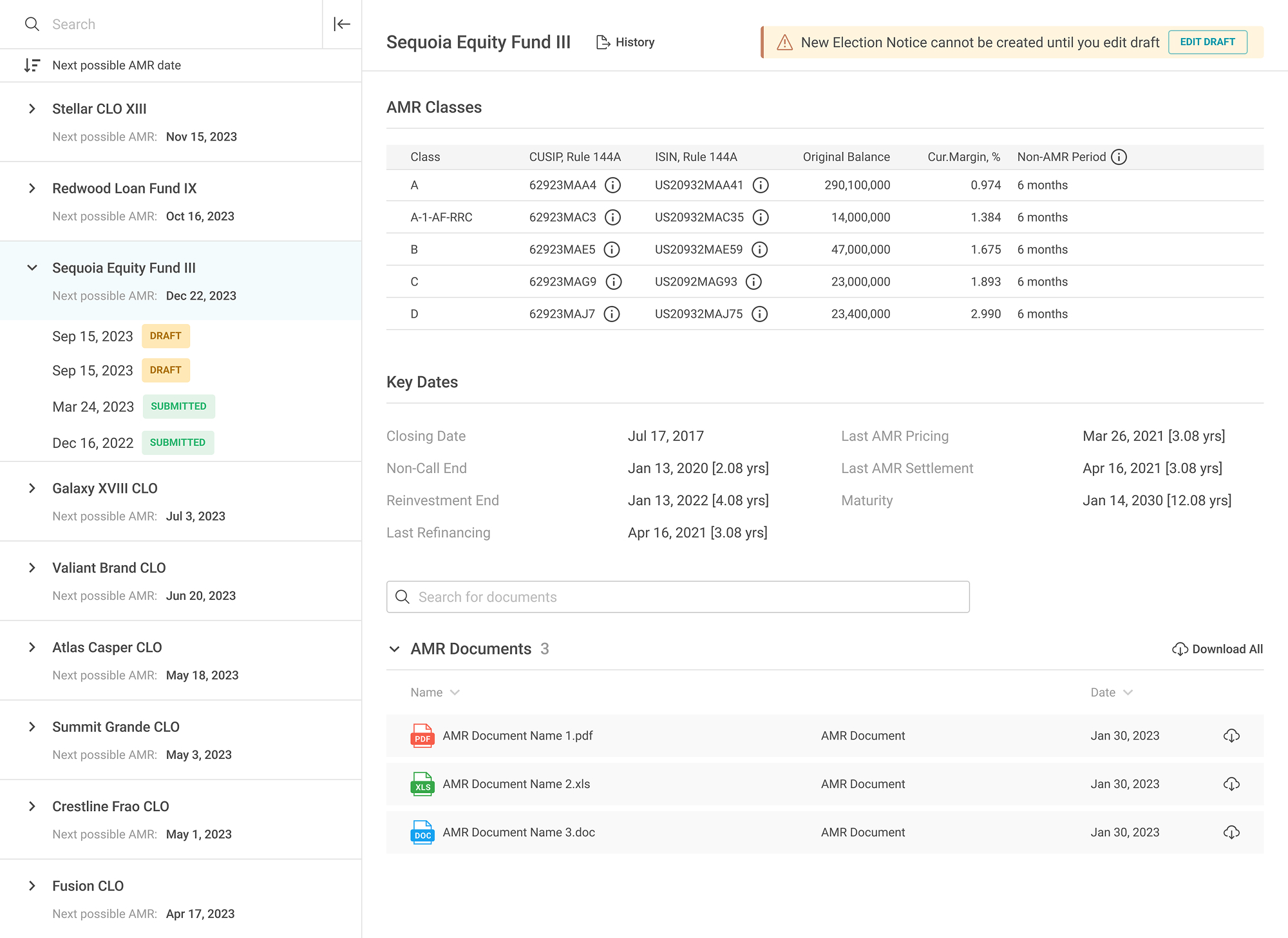
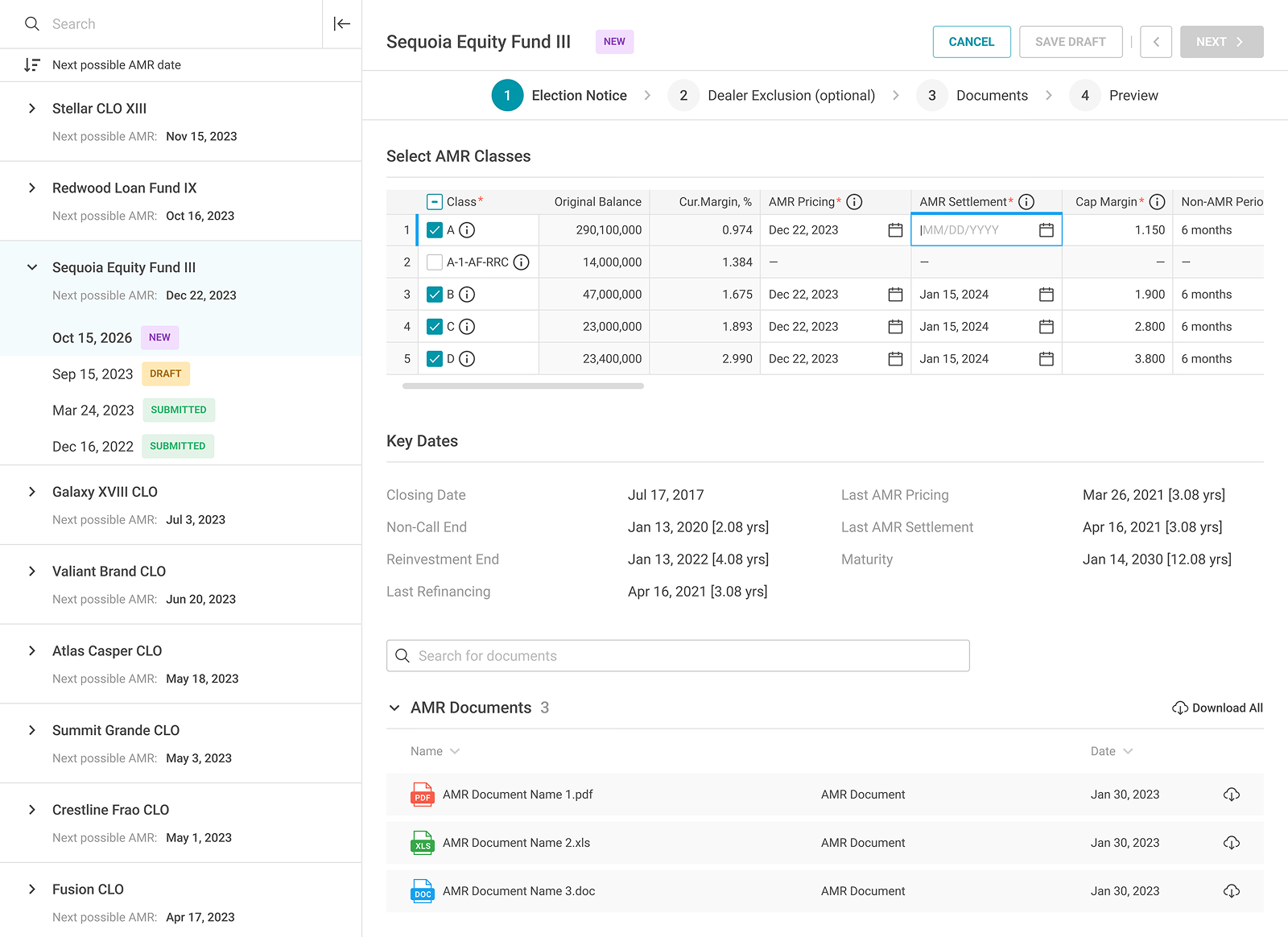
Defining election scope
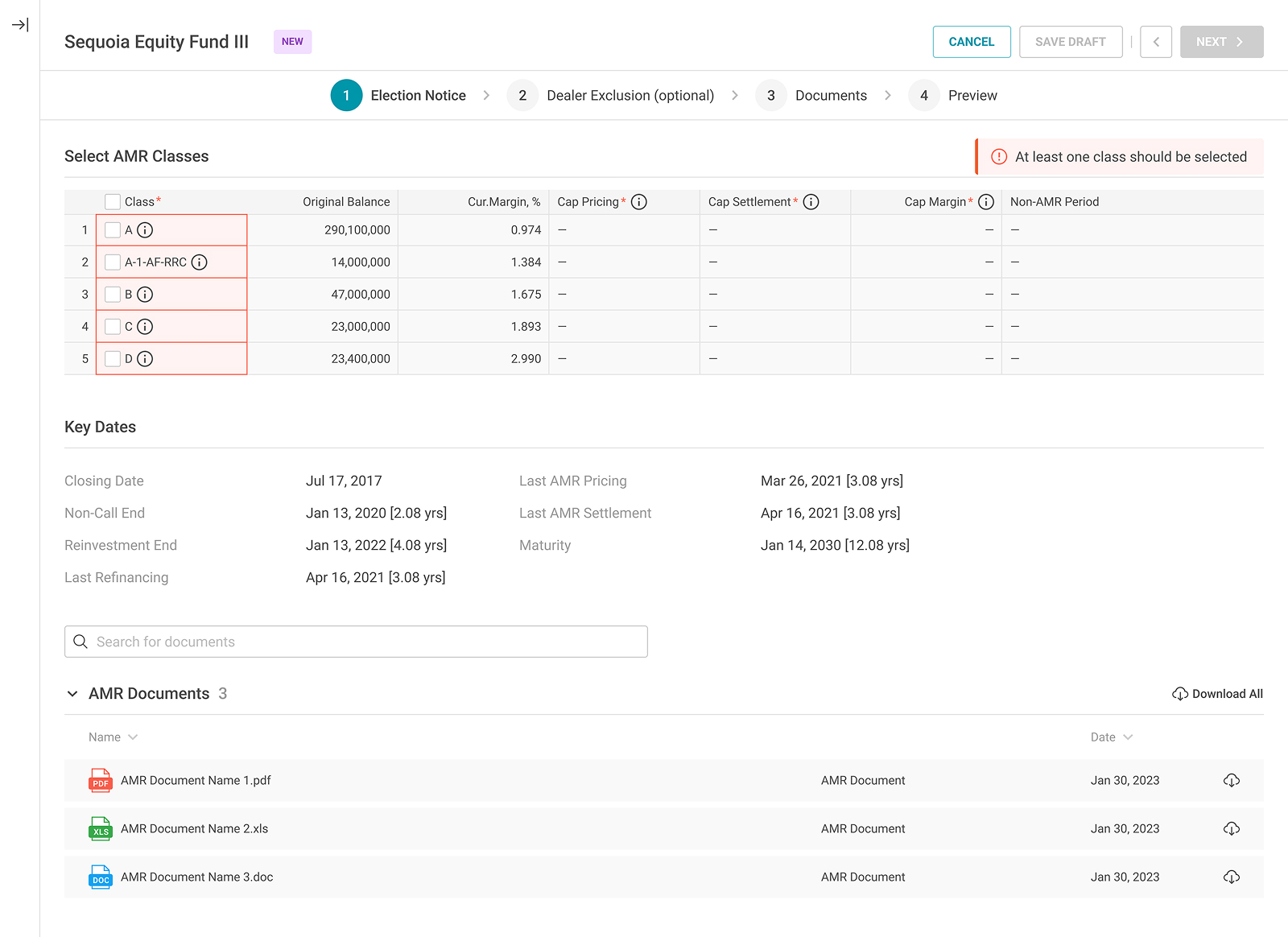
- Users select AMR classes and provide election-specific inputs in a single, structured step.
- Deal-level data is reused to reduce duplication and ensure consistency across submissions.
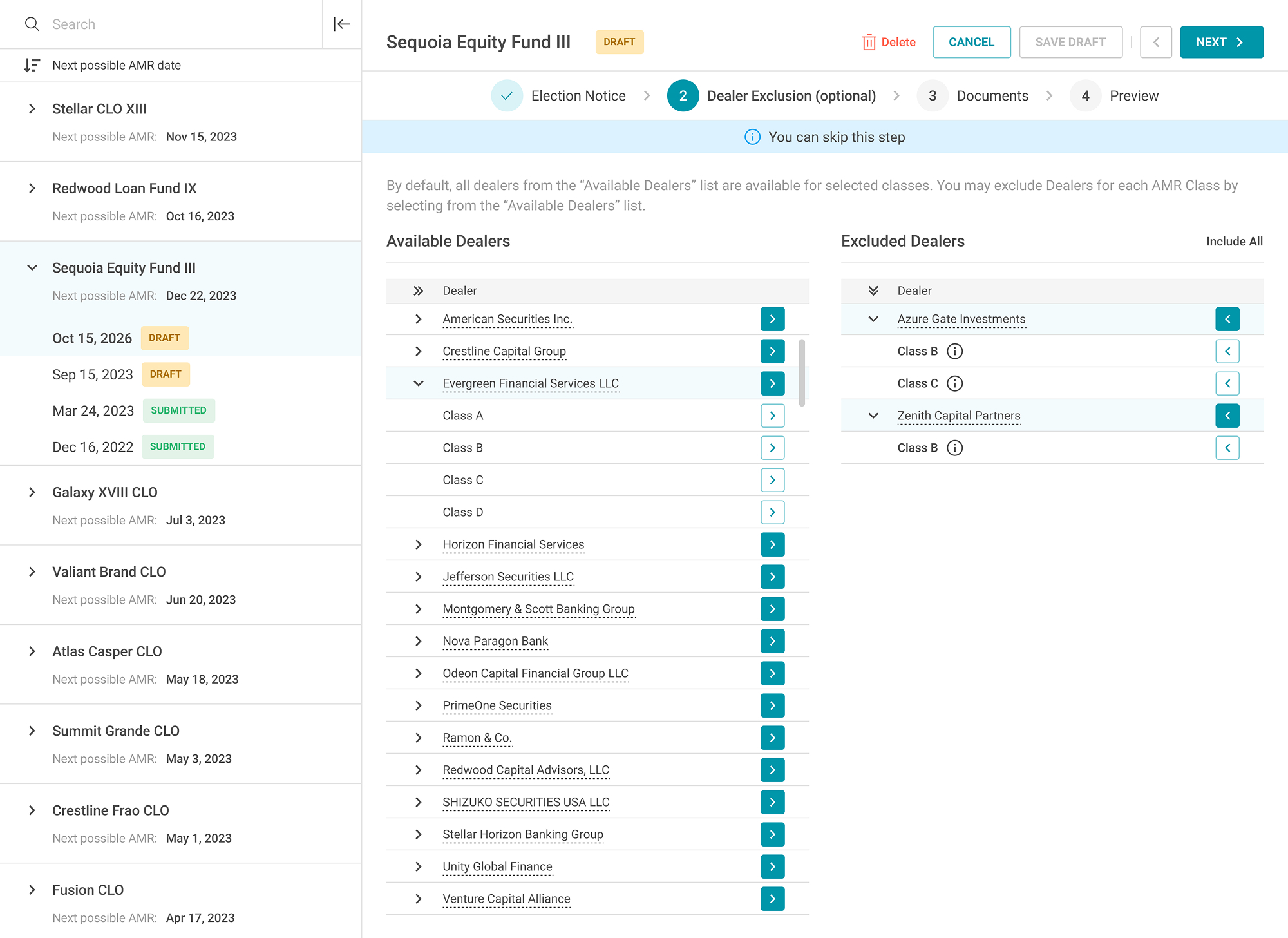
Handling dealer exclusions
- Dealer exclusions are treated as an optional, isolated step to separate core election data from conditional logic.
- Class-level exclusions support real trading scenarios without impacting unrelated classes.
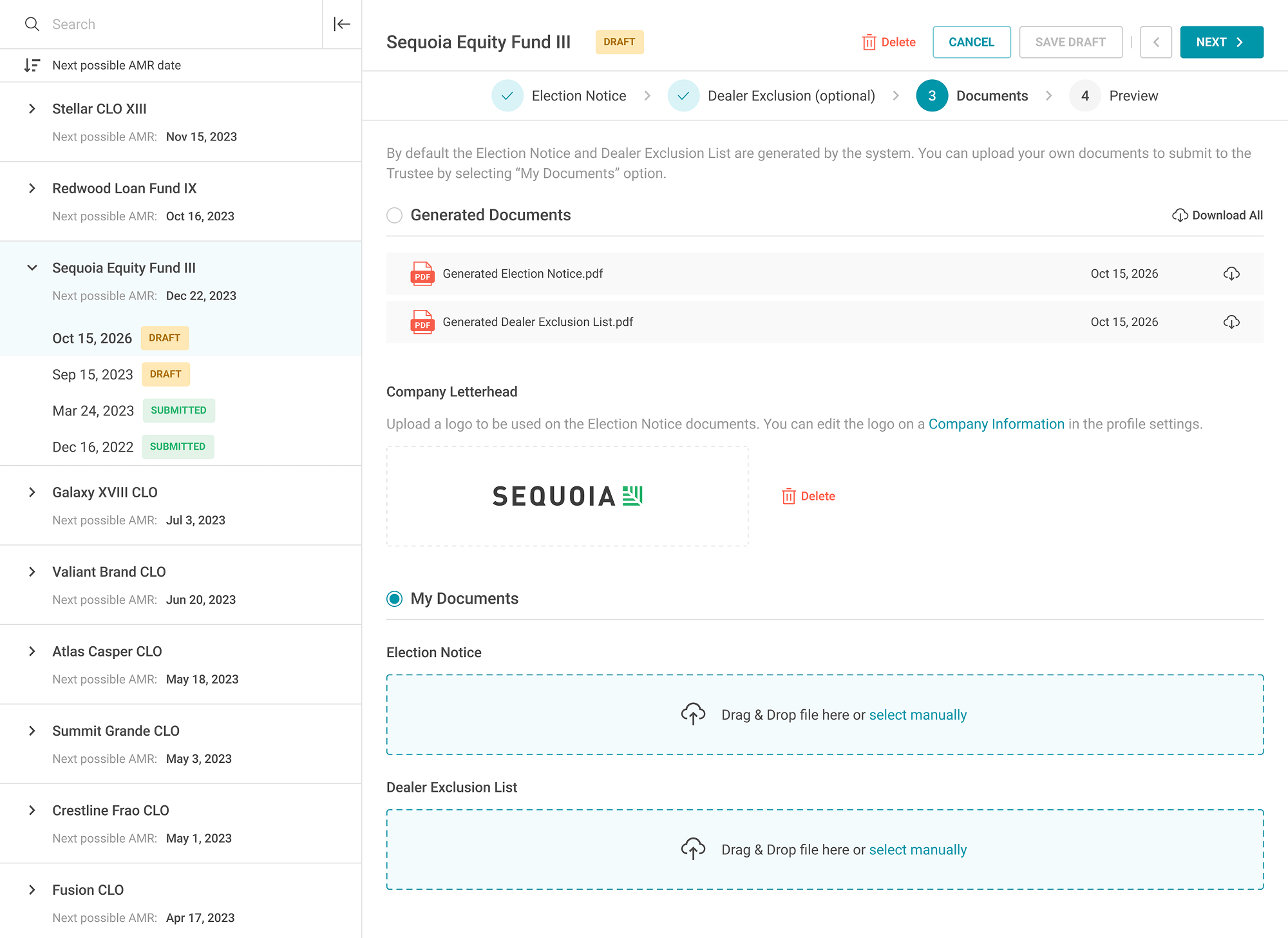
Managing documents
- Election Notice documents are generated automatically, with the option to replace or attach custom files when required.
- Clear document sources ensure users know exactly what will be submitted.
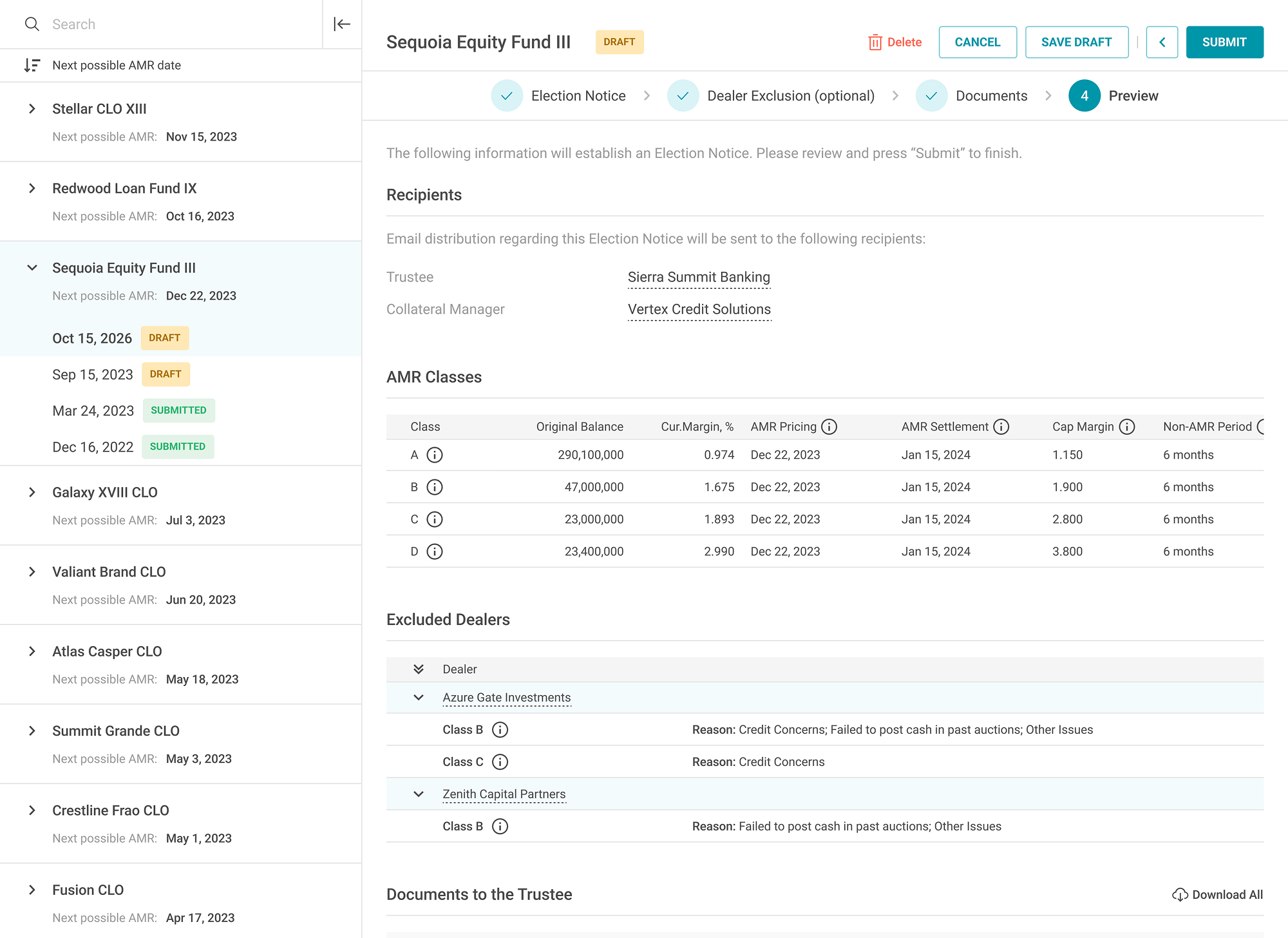
Final review and submission
- A consolidated preview surfaces all election details, recipients, and documents before submission.
- This final checkpoint reduces errors and increases confidence in compliance-critical actions.
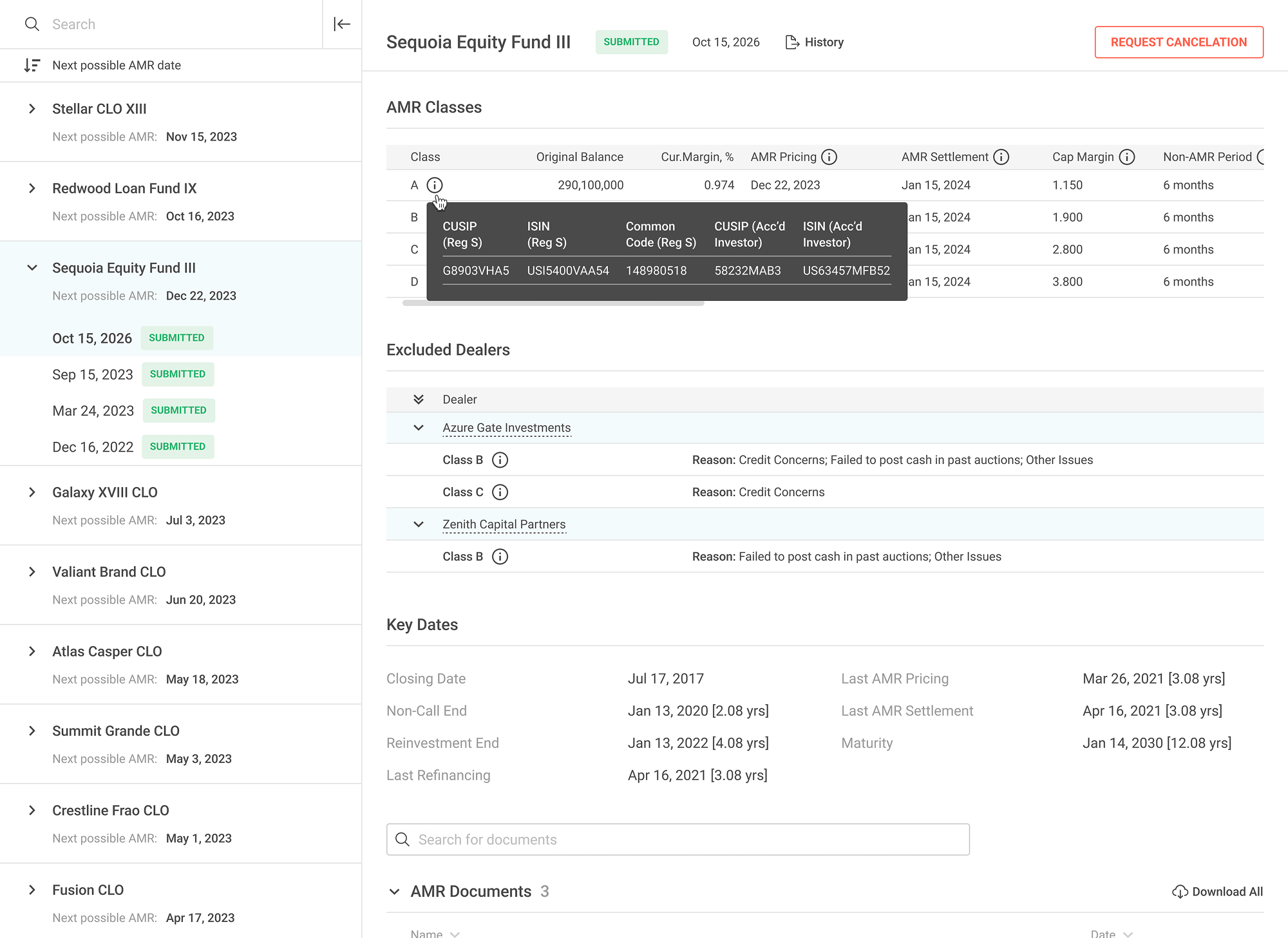
- Submitted notices are locked and added to the deal history to preserve data integrity and auditability.
- In-product cancellation enables controlled reversals without manual follow-ups or email coordination.
Impact
Before this redesign, election notices relied on email threads, spreadsheets, and ad-hoc checks.
Moving this workflow in-product created a single source of truth, reducing setup time, errors, and support load while improving on-time delivery.
SETUP TIME
3 days
Before: 10 d → After: 3 d
-70%
ON-TIME RATE
90%
Before: 60% → After: 90%
+30 pp
REWORK RATE
4%
Before: 18% → After: 4%
-78%
Support tickets
5
Before: 13 → After: 5
-62%
Before: average of last 3 email/spreadsheet cycles; After: first 3 cycles on the new workflow. Medians; normalized/anonymized.
Business meaning
- One source of truth and clear ownership → fewer handoffs and faster cycle time.
- Structured inputs and validations → fewer data errors and corrected notices.
- Auditability and status visibility → fewer support requests and faster resolution.